
We are continuing to expand and explain AMR’s Theological Vision, offering a closer look at each of its core commitments. as it shapes the church’s pursuit of renewal, faithfulness, and mission amid fear, cynicism, and cultural uncertainty.
“We make no apology for our determination that this Church will be thoroughly Calvinistic in doctrine and intensely Presbyterian in government”—such was the claim that the first moderator of the Presbyterian Church in America, W. Jack Williamson, made at our first General Assembly. Of course, in the fifty-plus years since the PCA’s founding, we have wrestled with what it means to be “intensely Presbyterian in government.”
What did the founding generation mean by this? They had just experienced the massive centralization of the old Presbyterian Church in the United States, in which the various agency boards were eliminated for the forty-person General Executive Council. They had seen how the General Assembly enforced its will on the lower courts, especially in Mississippi. And they saw how “Union Presbyteries” and “Union Synods” were created by the Assembly to foster a future reunion with the northern Presbyterian Church over the objections of conservatives in the church.
Over against all this centralized power, the founders articulated a principle of “grassroots Presbyterianism.” With this, the main court of the church is the presbytery—the local presbytery is responsible for missions, for nominating men for the higher courts, for credentialing ministers and determining how that would occur. The PCA was structured to put as much power under the local control of presbyteries and away from the Assembly or the committees and agencies—so much so that for the first five years, the various agencies could not have their headquarters in the same city!
Fast Forward to the Present
Now that the PCA has celebrated its fiftieth birthday, it’s fair to ask how that’s worked for us. One of the trends over the past decade has been the centralization of power in the Assembly and with that a new interest in what it means to be “intensely Presbyterian in government.”
AMR’s theological vision statement clearly states that we too believe in being Presbyterian in government.
“Because Christ the King gathers and governs his Church, disciplining his flock through the polity and order he has given,
- We commit to acting as faithful stewards of the institution we have inherited, diligently pursuing its purity, peace, and unity. We will actively engage in the labors required by its discipline and government, confident that through the orderly processes of Presbyterianism, Christ cares for his Church.
- We oppose all forms of divisiveness, such as empty proceduralism or mob-like adjudication, instead energetically pursuing the biblical and constitutional means for confronting and correcting fellow believers.”
We would suggest that being “intensely” Presbyterian does not mean being divisively or harshly so. The Presbyterian processes in the Book of Church Order, the Rules of Assembly Operation, and Robert’s Rules of Order are meant to honor Christ the King and to serve the Church.
That’s where this article starts. From the earliest days of Presbyterianism—back to John Knox himself—we have stood for Christ’s kingship over his church. He is the one who gathers his church; he is the one who grows his church. Pastors and elders may preach and teach, sowing the seed of Christ’s Word, but God gives the increase (1 Cor 3:7). Above all, the church belongs to Christ—it is God’s field, God’s building (1 Cor 3:9).
But how does Christ rule his church? Through officers and laws. The officers he gives are elders and deacons; they are his gift to the church (Eph 4:8, 11–12). The laws that he gives are the broad outlines of Presbyterian polity—the elements of officers, oversight, and discipline. AMR strongly believes that the elements of our polity are given by Christ and are necessary for the existence of the church (WCF 1:6). There are many other circumstantial things we do with our church’s polity that are necessary for the good order of the church—they are not necessarily revealed in Holy Scripture but are agreeable to those general rules and guidelines.
AMR’s Presbyterian Commitment
We are committed to stewarding this Presbyterian branch of the visible church. The church is a necessary institution for the advancement of God’s mission; denominations form to carry out mission around confessional distinctives. The PCA stands in a long American Presbyterian tradition that we gladly inherit and utilize for the purity, peace, and unity of Christ’s church.
To that end, AMR is committed to being Presbyterian churchmen. What does that mean? It means seeking the good of the entire body—not just our friends, our former seminary classmates, our group. It means trusting the brothers, believing the best about them and their ministries, refusing to gossip about them, preserving their reputations. It means partnering together for mission, both at the regional presbytery level and at the national level. It means supporting denominational committees and agencies because that is how we do mission together.
It also means showing up to presbytery and General Assembly, having prepared to be good presbyters. It means participating on presbytery and Assembly committees, even those that do not seem to be prominent or have much “power” or influence. It means generally staying to the end of the meeting and not using the excuse of a long drive home to leave early.
And above all, our commitment means that we have a fundamental confidence in the goodness of our Presbyterian processes. Not because they are good in themselves, but because through them Christ rules and cares for his church. Christ cares for his church through officers and laws—and while many of our “laws” are manmade, circumstantial, and not divine law, they still are good processes that Christ himself uses for our good and his glory.
AMR’s Presbyterian Concerns
My expectation is that no matter where one finds himself in the PCA landscape, everything thus far would be relatively uncontroversial, even when a bit bracing. But AMR does have concerns about how Presbyterianism can be misused and abused. Because let’s be real: when we all do what we’ve committed to do, Presbyterianism is the best system of church government in the history of the world; but when we don’t do it or when we misuse it, Presbyterianism is the worst.
That’s why we stake our flag here: we oppose all forms of divisiveness from whatever quarter of the church it arises. Divisiveness can look like a Twitter mob trying to take down people or stop events. It can also look like an ever-increasing punctilious proceduralism—which is evidenced in the number of Book of Church Order–amending overtures, Review of Presbytery Records citations, and Standing Judicial Commission cases. In our present day, it appears that our increased litigiousness is not so much “intensely Presbyterian,” but harsh and divisive.
AMR continues to champion our biblical and Presbyterian polity processes. And to be sure, there are appropriate overtures, citations, and judicial cases—those are the processes that we use to perfect our polity and ensure appropriate discipline. But I, for one, am concerned that our present fad of “Presby-maxxing” is, ironically, a move away from our founders’ genius back toward the same centralizing instincts of the old dying church from which the PCA sprang.
Spiritual and missional growth isn’t found in ever-increasing regulation. It is found in the trust that Christ the King of the church engenders among brothers and sisters who are committed to common confessional and missional distinctives.
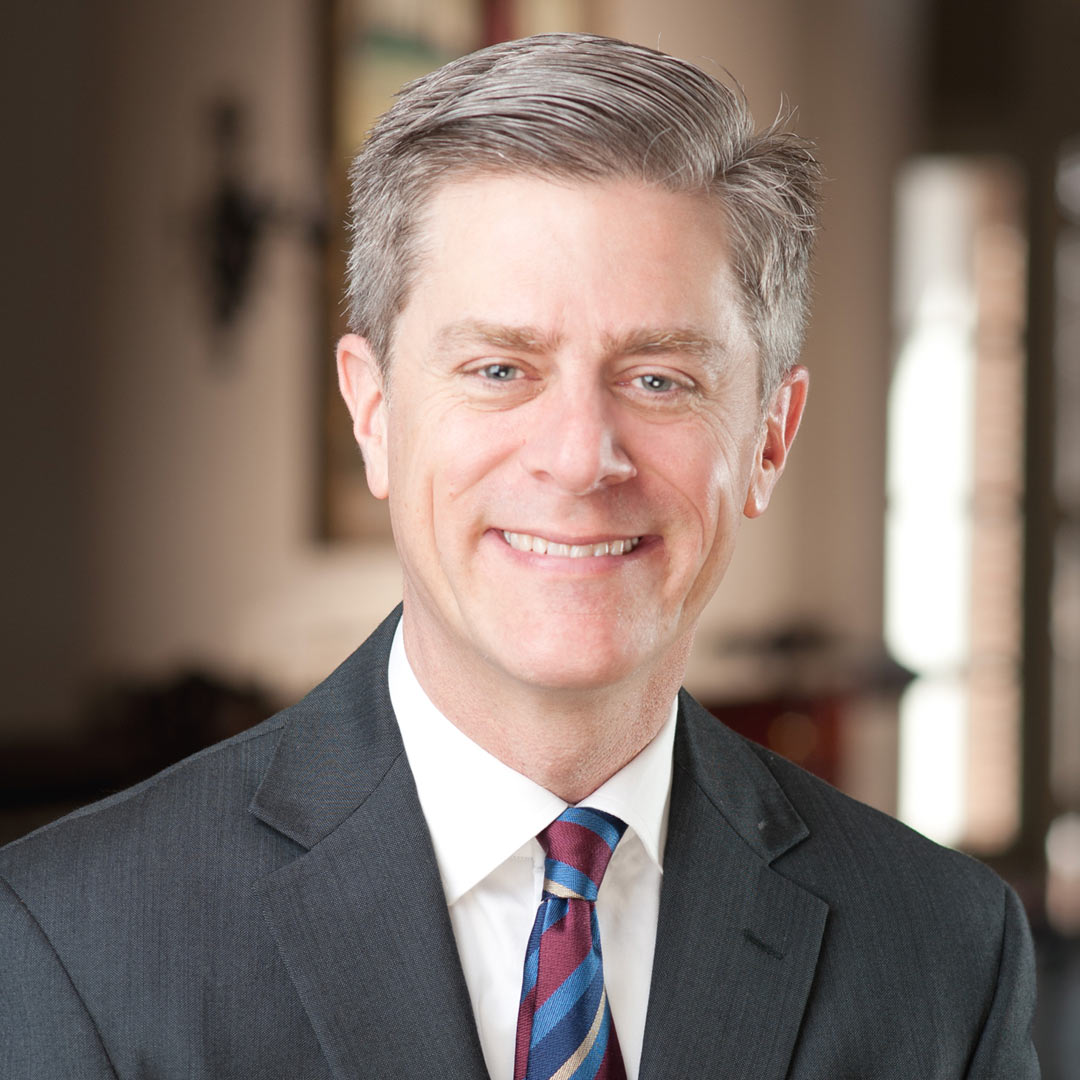
Born in Stratford, New Jersey, Sean moved up and down the eastern seaboard as a child. He graduated from Bob Jones University (BA, 1993; MA, 1994) and Westminster Theological Seminary (PhD, 2002). He was ordained as a Presbyterian minister in 2003, then served on the pastoral staff of Community Presbyterian Church (PCA), Louisville, Kentucky, and Covenant Presbyterian Church (PCA), St. Louis, Missouri. In 2009, he became Senior Pastor of the First Presbyterian Church, Hattiesburg, Mississippi, where he served until coming to serve as senior pastor at Independent Presbyterian Church, Memphis, Tennessee in 2017.
Sean has taught at two theological seminaries. He is presently the Chancellor’s Professor of Church History at Reformed Theological Seminary, where he has taught since 2011. Prior to that, he was chief academic officer and associate professor of church history at Covenant Theological Seminary, where he served from 2004 to 2009.
Sean has also written many books, including On Being Presbyterian: Our Beliefs, Practices, and Stories (2006); God’s Grand Design: The Theological Vision of Jonathan Edwards (2011); J. Gresham Machen (2015); and For a Continuing Church: The Roots of the Presbyterian Church in America (2015). He and his wife Sara have four adult children: Samuel, Elizabeth, Andrew, and Benjamin.