
[We are continuing to expand and explain AMR’s Theological Vision, offering a closer look at each of its core commitments. Below is the piece on gratitude—one of the foundational postures that shapes how we understand and steward the life of the Church.]
When you consider the PCA, what sticks out to you most: that which is bad about our denomination, or that which is good?
In his essay “Gratitude in an Angry Time,” political analyst Yuval Levin poses a similar question regarding how we view the world. He suggests that if you have high expectations for this world in its current form, then the bad is what you will notice most. You will likely attribute society’s problems to the malice or selfishness of a distinct group of people. Such a perspective produces outrage. If, on the other hand, you begin with an understanding of the world as deeply corrupted, you will be more predisposed to be struck by what is good—to be impressed wherever you find virtue and righteousness. This perspective encourages gratitude.
While everyone will rightly experience both reactions in our broken, yet beautiful world, whichever of these is stronger will determine how a person relates to society. Those primarily outraged by all that is wrong will generally focus their energy on tearing down, using the levers of power at their disposal to defeat whatever political or structural “enemy” they blame for the world’s problems. Those who instead are guided by gratitude will have a desire and commitment to protect the good that they find. Gratitude is by nature conservative.
When it comes to addressing our own denominational challenges, the mood of the present moment encourages us to default to outrage. Ours is an era of disillusionment, where the once glittering promises of modernity have been exposed as fool’s gold. Fueled by a desire to assign blame, society’s collective grief and anger seem to be especially channeled towards institutions. Structures are seen as vehicles of corruption; for evil to be overcome, the establishment must be torn down. The PCA is not immune from these cultural forces. Surrounded by such an outlook, it would be surprising if we did not also experience cynicism and distrust toward our denominational agencies and broader communion.
Yet the gospel empowers us to see differently. It opens our eyes to the enormity and pervasiveness of sin and fills our hearts with the grace of God in Christ Jesus. It draws us into wonder at the undeserved goodness we now receive—not only God’s personal kindness, but also the institutions he has given us. For all its flaws, Christ’s church and its leaders are gifts.
This is why, after defining the foundation we have in Christ, AMR’s theological vision for our denomination begins with gratitude:
Because the exalted Christ has given his gifts to his Church, with his Spirit equipping and upholding his covenant community from one generation to the next, we commit to a posture of gratitude. We are heirs, not founders, of a great tradition, called to be faithful stewards of a precious institution rather than to neglect it or treat it as a means for self-promotion. Mindful of our indebtedness to those who have gone before us, we will honor and build upon the rich theological and denominational resources with which we have been entrusted.
If gratitude produces a commitment to protect what is good, what does this look like in our denominational context?
Recognition
First of all, gratitude involves recognizing what we have been given in our denomination. It begins with noticing and appreciating the goodness of all the diverse gifts we have received from God. When Paul speaks of the absurdity of an eye declaring that it has no need of a hand, he’s speaking of a failure of gratitude, a lack of perceiving the gracious way in which God composed the body so that every member is precious.
The wide array of gifts we enjoy in the PCA is part of God’s gracious and intentional design for our denomination. What began as a largely white and southern denomination has, by the kindness of God, grown and diversified over its five decades. Today we are not only the denomination of Briarwood in Birmingham, but also of Korean Central in Virginia and Redeemer in New York City, of Park Cities in Dallas and Resurrection in Oakland. Some of our churches have steeples, robed choirs, and Trinity Hymnals; others meet in rented spaces, with denim-clad musicians leading Indelible Grace tunes. Gratitude involves recognizing and valuing these gifts in all their diversity.
While the “big tent” metaphor is not sufficient on its own to describe a healthy denomination—since defined boundaries are also necessary—it nevertheless captures something important We must be capacious enough as a denomination to welcome all that God gives us. While maintaining communion amidst differences is undoubtedly complex, we should resist the temptation to “unify” our fellowship by eliminating all who differ on tertiary issues. “Do not grumble against one another, brothers, so that you may not be judged.” This would indeed be a failure of gratitude.
Respect
Second, gratitude involves respect for what we have been given. We have received a “great tradition” and a “precious institution.” Such appreciation instills a corresponding humility in how we view ourselves. We are “heirs” who are “indebted to those who have gone before us.” What Paul said to the Corinthians about their spiritual maturity he might just as easily apply to us as we consider our denomination: “What do you have that you did not receive?”
As with every human institution this side of Christ’s return, the PCA has flaws and failings, and it is the calling of each new generation of its leaders to work to correct them and move our denomination towards greater Christlikeness. Yet such work must always begin with a respectful awareness of what has gone before and an earnest effort to speak or act only after we first understand. We interpret Scripture best as we stand on the shoulders of the Westminster divines and should be cautious in taking exceptions to the standards we affirm. We engage with each other well when we start from the assumption of godliness and wisdom in our fellow presbyters, both past and present, and seek to learn from them. We serve our denomination most effectively when whatever improvements we might pursue are made slowly and with care, to ensure as best we can that we are actually building up, rather than simply tearing down. General Assemblies overloaded by overtures seeking to bring change to our policies should not be the norm. Gratitude is by nature conservative.
Responsibility
Finally, gratitude involves an understanding of the great responsibility we have toward what we have been given. We will be tempted to relate to our denomination as consumers. Busy pastors might experience the inclination to treat denominational responsibilities as a distraction from “real ministry” and something to avoid when possible. Those with an active social media presence face the ongoing pressure to gain an audience by villainizing fellow presbyters, regardless of how that might damage denominational unity and Christian witness.
Such, however, is not the way of gratitude. Our high calling is “to be faithful stewards of a precious institution,” to be those who “honor and build upon” what we have received for a time from God. An institution, unlike an individual pastorate or personal platform, is something that continues from one generation to the next. If we are good and faithful stewards, what we pass down will be richer and even more full of Christ and gospel fruitfulness than what we received. This ambition will require much from each of us. It will involve personal investment in the sometimes slow and mundane processes of presbyterianism, perseverance in the challenging work of “maintaining the unity of the Spirit in the bond of peace,” and, above all, prayer. Much is required; but, of course, much we have been given.
AMR offers an unapologetically positive and conservative vision for the PCA. Yes, there are flaws. Our founders were not perfect, and neither are those that have sought to continue what they began. We have much work to do. And yet as we stop and consider our denomination in its totality, what strikes us most is not its failings but the amazing things God has done among us. When we consider such marvels as the rich theological work done by study committees, the remarkable development of RUF, the global reach of our missionaries, the countless and variegated church plants, and, among many other glories, the hundreds of thousands brought nearer to Christ in our many congregations, we cannot help but be filled with awe and wonder and, above all, gratitude.
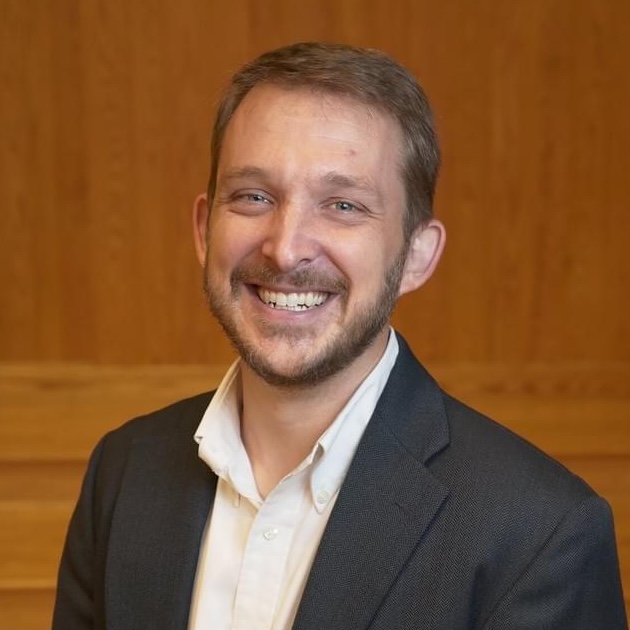
Geoff Ziegler is the senior pastor of Trinity PCA in Western Springs, Illinois, and a visiting lecturer in practical theology at RTS Orlando. He received his Ph.D. in systematic theology from Wheaton College and is the author of Free to Be Sons of God and the Galatians study for Crossway’s Knowing the Bible series.