
For their December 24, 1962, issue of the liberal Presbyterian Outlook, the editors commissioned a symposium with theology professors representing the four Presbyterian Church in the United States (PCUS) seminaries. The question to be addressed: “Do we need an infallible Bible?” And each of these professors answered in the negative. To a man, all four mocked the idea that the original writers of Scripture were kept from error in the original manuscripts; all four raised various kinds of errors or discrepancies in the Bibles that we now have; and all affirmed that historical, geographical, or scientific errors did not undercut the biblical account of Jesus’s life, death, and resurrection. And so, do we need an infallible Bible? No, we do not.
Conservatives in the PCUS were not surprised by these answers. For over two decades in the pages of their magazine, the Southern Presbyterian Journal (later titled simply Presbyterian Journal), editors and authors had pointed out repeatedly the failure of their denomination and its leaders to hold to the inspiration, infallibility, and inerrancy of Scripture. By abandoning the verbal plenary inspiration of the Bible, the church had no clear basis for seeing Scripture as authoritative. Without an authoritative Bible, the rest of the fundamental doctrines fell by the wayside also.
While the Presbyterian conservatives who formed the PCA in 1973 might have disagreed about much, they were all united in their understanding of the nature of Holy Scripture. One of the founders of the PCA, Kennedy Smartt, later reflected on how this was the case. Twenty years after the founding of the denomination, he wrote to over thirty leaders who were involved in key positions of responsibility, asking them to reflect on why they helped form the PCA. While many of these leaders had taken disparate stands in the early history of the PCA, still the vast preponderance of those who responded—22 of 31—cited the need to stand for the inspiration and inerrancy of the Bible.
That’s still the case today. In the PCA we may disagree about a range of things, but we all start from the fundamental commitment to the inspiration, infallibility, and inerrancy of Scripture. We are one of the largest Protestant denominations in America that requires all of its officers—pastors, elders, and deacons—to take a vow stating our belief that “the Scriptures of the Old and New Testaments, as originally given, to be the inerrant Word of God, the only infallible rule of faith and practice” (BCO 21-5, 24-6). As a denomination, the PCA is committed to biblical authority; as an organization, the Alliance for Mission and Renewal is as well. We gladly join our brothers and sisters throughout the PCA in being “faithful to the Scriptures.”
Grounding
The PCA commitment to the inspiration, infallibility, and inerrancy of Scripture is rooted in the Bible’s own claims about itself. Most importantly, the Apostle Paul taught that “all Scripture is God-breathed” (2 Tim 3:16). God the Holy Spirit carried along the writers of Scripture in such a way that what they wrote is in fact the Word of God (2 Pet 1:19-21). Various writers in the Bible recognized each other’s writings as Holy Scripture; for example, Peter observed that while there were some things in Paul’s writings that were hard to understand, yet the ignorant will twist his words like they do the other Scriptures (2 Peter 3:15-16). Jesus himself recognized that the Law, Prophets, and Writings (thus the Old Testament Scriptures) could not be broken, no matter how obscure (John 10:34-35). Indeed, he taught that no part of Scripture, not even a dot or an iota, would pass away until the world itself passed away (Matt 5:17-19). And that’s because, as the psalmist taught, the law of the Lord is “perfect” (Psalm 19:7-11).
Identity
Throughout the period leading up to the formation of the PCA in 1973, southern Presbyterian conservatives argued that without a clear understanding of biblical authority, there would be no confidence in what the Bible taught about fallen human nature, salvation through Christ’s death and resurrection, or God’s ultimate purpose for his world.
As Roy LeCraw observed in 1966, “The central issue is this: Is the Bible really God’s infallible, inerrant witness to men, written by the hands of men who were directly under the inspiration and guidance of the Holy Spirit? Or is it merely a record of man’s religious instincts, bearing witness to his ‘growing awareness’ of God but containing many allegories, myths, and sayings which are only human in thought and application?” The conservatives who formed the PCA believed the former—which drove missions and evangelism forward.
Even after the PCA formed, our leaders have continued to defend the inerrant Scriptures. In 1978, the International Council on Biblical Inerrancy was formed, led by PCA luminaries R. C. Sproul and James Montgomery Boice. Likewise, the major seminaries that supply pastors and ministry leaders to the PCA all require faculty to affirm the inerrancy of Scripture, either through their ordination vows or through faculty commitment statements. These statements would prove significant as different faculty challenged the consensus understanding of what biblical inspiration and inerrancy required—yet to this day, unlike the old PCUS, our seminaries continue to uphold the Bible’s own commitment to its “God-breathed nature.”
Diagnosis
Though every officer in the PCA takes a vow expressing his belief in the inerrancy of Scripture—and hence, its authority as the rule of faith and practice—all too often one of several faults develops. One fault is when we fail to turn to the Scriptures in matters of religious controversy. In the PCA’s history, we have had several such controversies: the nature of the so-called “sign gifts” like prophecy and speaking in tongues; theonomy and current questions over “Christian nationalism”; racial and ethnic reconciliation; the role of women in the life of the church. We have been at our best in these controversies when we have turned to Holy Scripture; we have not been our best when we’ve been driven by other useful yet less authoritative sources.
Yet another fault is when we assume that our “side” in the controversy is the only one that is truly biblical while the other side is merely driven by culture or tradition. The truth, of course, is that we inevitably operate within cultural systems that shape our readings of Scripture. That’s why we need each other—to challenge and correct so that we might see our own blind spots. However, when one side in any controversy fails to approach the issue with a full confidence that the other side is trying to submit to the authority of the inerrant Word, we fail to honor each other as being faithful to the Scriptures. We are all trying to be faithful to the Scriptures and we all need the humility to recognize this is the case.
Practice
In practice, this faithfulness to the Scriptures means that, in every area of life, we ask the question, “What does the Bible say?” We can come to the Bible believing that as the rule of faith and practice, it can teach us how to live godly lives in this world—in our callings as workers, as parents and grandparents, as pastors and elders, as community leaders. The Bible offers wisdom and instruction about how to handle our money, how to parent our children, and how to interact with political authorities. And of course, on the central matter of the Bible, it clearly teaches us how we might be right with God through faith in Jesus Christ.
But in our denomination and in our local churches, the Bible serves as a rule of faith and practice as well. As we wrestle through what is biblical and what is merely cultural in the ways we think about men and women in families or in our churches, as we consider what God’s mission requires of us when it comes to racial and ethnic reconciliation and partnership, as we work on appropriate shepherding structures in our own congregations—the Bible offers us instruction. We are Reformed and Presbyterian because we believe it to be biblical.
Looking forward
For over fifty years, God has blessed the PCA with sustained growth. Even in recent days, when other major Protestant denominations in the United States have seen major declines, the PCA has continued to grow. I strongly believe it is because we are “faithful to the Scriptures,” and especially because we are committed to the inspiration, infallibility, and inerrancy of the Bible. As long as we continue to maintain this commitment above all others, our future remains bright.
It is important to recognize that it is possible to be “Reformed” in the broad sense of holding to the Reformed tradition and not hold to the inerrancy of Scripture. After all, in 1962, when the four PCUS theology professors said that we did not need an infallible Bible, every one of them would have claimed to be Reformed, mostly working in the train of Karl Barth. Likewise, it is possible to be “missional” without holding to the authority of the Bible. After all, some of the most important missiologists of the past sixty years—David Bosch, Lesslie Newbigin, Andrew Walls—raised questions about biblical inerrancy even while they claimed to have “proper confidence” in the Bible itself.
What will continue to mark the PCA out in the years ahead is our commitment to the Bible as God-breathed, as without error, as trustworthy and true. As men stand in our pulpits and begin each week by saying, “Please take your copies of the Word of God,” we signal the vital importance of this commitment. It is one that we all share—all of us, on every side in the PCA. And it is one commitment for which we should always give thanks in the PCA.
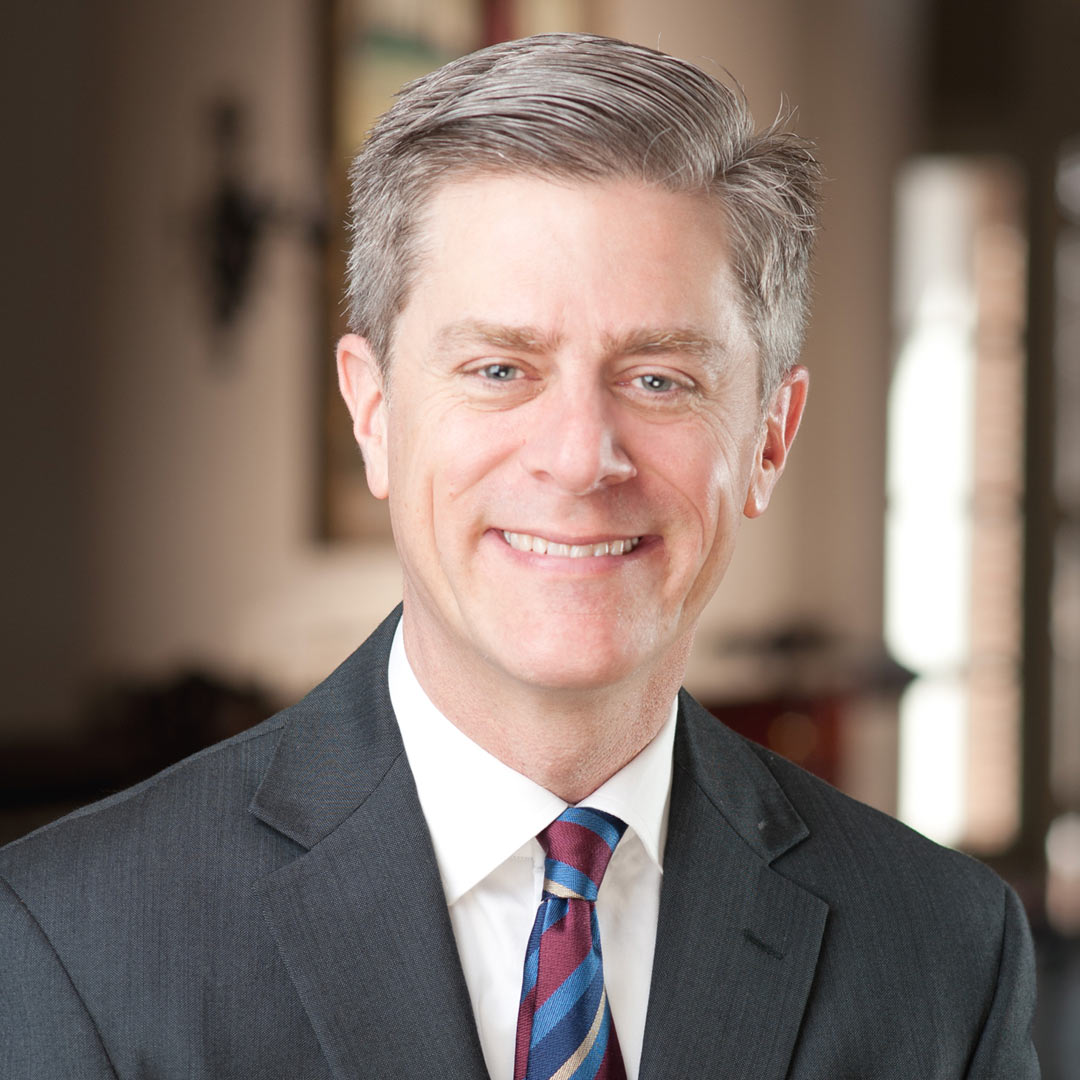
Born in Stratford, New Jersey, Sean moved up and down the eastern seaboard as a child. He graduated from Bob Jones University (BA, 1993; MA, 1994) and Westminster Theological Seminary (PhD, 2002). He was ordained as a Presbyterian minister in 2003, then served on the pastoral staff of Community Presbyterian Church (PCA), Louisville, Kentucky, and Covenant Presbyterian Church (PCA), St. Louis, Missouri. In 2009, he became Senior Pastor of the First Presbyterian Church, Hattiesburg, Mississippi, where he served until coming to serve as senior pastor at Independent Presbyterian Church, Memphis, Tennessee in 2017.
Sean has taught at two theological seminaries. He is presently the Chancellor’s Professor of Church History at Reformed Theological Seminary, where he has taught since 2011. Prior to that, he was chief academic officer and associate professor of church history at Covenant Theological Seminary, where he served from 2004 to 2009.
Sean has also written many books, including On Being Presbyterian: Our Beliefs, Practices, and Stories (2006); God’s Grand Design: The Theological Vision of Jonathan Edwards (2011); J. Gresham Machen (2015); and For a Continuing Church: The Roots of the Presbyterian Church in America (2015). He and his wife Sara have four adult children: Samuel, Elizabeth, Andrew, and Benjamin.