

“Because, as the gospel creates new church communities, Christ the Chief Shepherd pastors his people through elders,
- We commit to diligently training and carefully ordaining elders from various languages and cultures whose ministry, rule, and care reflect the strength and gentleness of Christ: godly men whose character is above reproach, exemplary in integrity, humility, and repentance, and whose competence in the Word of God enables them to instruct, correct, and guard against error.
- We oppose expressions of leadership that either abdicate authority or exercise it in a domineering and abusive manner.”
During my time in seminary in the late 1990s, I first experienced what it means to be shepherded by the elders of a local church. A faithful ruling elder regularly called me, asking how he might pray for me. He invited me out for dinner, asking questions about both my studies and my soul. At weekly worship he made a point to greet me, often following up on the issues we had talked about earlier. Initially, I didn’t have a category for what he was doing. But now I see that he was teaching me—a future pastor—that Christ the Chief Shepherd pastors his people through Christ-shaped elders.
Although I grew up in a church-attending family, I’d never been cared for like that by someone who wasn’t a “professional Christian.” Sure, pastors shook my hand in the receiving line after the service. Campus ministry staff met with me regularly to disciple me. The college pastor at my church gave me books to read and asked me how I was growing in godliness and prayer. But here was an adult man, with a busy job and a family of his own, pastoring me with patience and grace.
Now having served as a local church pastor for the last twenty years I understand the indispensability of Christ-shaped elders in sustaining the body of Christ. The elders of the church are not a Board of Directors carrying out administrative responsibilities. The elders are not solely successful business leaders shouldering the financial burdens of the church. They are pastors, elders, teachers, shepherds. They’re given a variety of titles to represent the variety of functions carried out within the church. And recognizing that God does not look on the outward appearance but on the heart (1 Samuel 16: 7), they are leaders shaped not by the outward standards of the world but by the inward standards of character, piety, and faithfulness.
A Commitment to Elder Training
What I didn’t see in that elder’s predictable, humble care for me during seminary was the diligent training and careful ordination process he had undergone in order to prepare him to minister to me. Elders don’t emerge in the church fully formed; they are developed, they are grown in a greenhouse of grace, fed by the Word and sustained by the Spirit. This is true of both ruling elders and teaching elders. The development of Christ-shaped elders comes through both informal and formal means. And the development of Christ-shaped elders manifests not only in their theological orthodoxy (right belief), but also in a corresponding orthopraxy (right living), and orthopathy (right feeling). Christ-shaped elders are whole in mind, body, and heart—men with intellectual understanding, spiritual maturity, and emotional health.
Thus, perhaps more than anything, Christ-shaped elders are formed by a habit of repentance. As those who trace our theological heritage back to a door in Wittenberg must heed the first of Luther’s 95 theses: “Our Lord and Master Jesus Christ, when He said, ‘Repent,’ willed that the whole life of believers should be repentance.” Church elders are formed by a repentance which roots them in God’s grace and which produces the fruit of holy living in their lives. That’s why I invite the elders of our church to join me as pacesetters in repentance for our congregation. In leading the way in repentance, our congregation over time sees the beauty of God’s free grace for our sin. Furthermore, our regular repentance leads us into dependence on God’s Spirit; the Spirit that produces the fruit of integrity, piety, and faithfulness.
Through God’s Varied Grace
Although all elder training in the PCA consists of certain non-negotiables, it can (and should) take many forms across the denomination. Two years ago our church launched an Emerging Leaders Program focused on identifying and nurturing future church leaders. We were partly inspired in this work by a nearby sister church that for many years has run a Pastoral Intern program which has proved successful in guiding seminary-trained men through licensure and ministry preparation. In a year-long program these pastoral interns develop both their facility in teaching and preaching God’s Word and their soul-readiness to lead and serve amidst the vagaries of congregational life. The leadership development programs at our respective churches look different, but are committed to the same goal: forming Christ-shaped elders for the PCA.
At a historical moment when many in the church are concerned about addressing the future leadership pipelines for the church, we need to remember that God sees fit to gift, call, and equip a variety of men for the office of elder. While meeting the same high standards of character and doctrinal understanding, elders—as shepherds—must also know their respective sheep. These local leaders called into specific ministry contexts should represent all sorts of background cultures and languages so that the church can extend to people of every tribe, tongue, and nation.
This summer I’ve been preaching through the book of 1 Peter which has a lot to say about Christ-shaped elders. In chapter 4 Peter writes, “As each has received a gift, use it to serve one another, as good stewards of varied grace.” On the basis of God’s varied grace, Christ-shaped leaders should recognize their unique roles within the household of God and seek opportunities to effectively steward their gifts in service to others. Within God’s family there is no place for coveting the gifts God has given to another man, nor expecting that every elder be cast from the exact same mold. A denomination committed to Christ-shaped elders must be receptive to diverse expressions of God’s varied grace.
AMR seeks to cultivate a hospitable posture to this kind of diversity of Christ-shaped elders and emerging leaders within the denomination, particularly those coming from cultural backgrounds outside of what is typical in the PCA. We eschew the temptations of cultural narrowness and contextual familiarity, recognizing that a national denomination requires heterogeneous leadership. Therefore, a hospitable posture starts with an awareness of different experiences within the PCA and a sensitivity to the issues that are of a primary concern to others. Such a posture also avoids maintaining unnecessary barriers to full participation and leadership within the denomination. Christ-shaped elders model the stewardship of authority exhibited by Jesus himself, who willingly disadvantaged himself for the sake of the marginalized and disenfranchised.
Not Domineering
Later, in the same book, Peter gives a warning against flawed leadership in the church. “Shepherd the flock of God that is among you,” he exhorts, “exercising oversight, not under compulsion, but willingly, as God would have you, not for shameful gain, but eagerly, not domineering over those in your charge, but being examples to the flock.” (1 Peter 5:4)
Christ-shaped elders must avoid all sorts of potential pitfalls in their leadership. In our church’s training classes, we talk through real-life examples (unfortunately, all too common in our denomination) of leadership expressions that deviate from the Biblical standard. We talk about the elders who, mimicking that initial sin of our federal head Adam, abdicate leadership, remaining silent and passive while individuals in the congregation disobey the straightforward teaching of God. We talk about elders who come in wolf’s clothing, seeking to steal, kill, and destroy the vulnerable sheep of God. We talk about those church leaders who, seduced by the trappings of power and authority, use their position to abuse the sheep, speaking and acting harshly, in violation of both Christ’s example and exhortation.
The work of shepherding in Christ’s Church offers temptations too great to resist and pressures too great to bear alone. Fortunately, God uses Christ-shaped elders themselves to guard the church against malformed elders. This guarding initially happens individually, with one brother correcting another, just as I was gently chastened earlier this year by a brother in my presbytery. But it can (and must) also happen through the formal structures of the church’s discipline process. The biblical beauty of presbyterianism is that God in his wisdom provides a plurality of Christ-shaped elders for his church, to share together in the sacred calling of shepherding and to preserve the Christ-likeness of these elders themselves.
Conclusion
Since the New Testament era the Kingdom of God has expanded through the mission of church-planting, which itself has required the multiplication of Christ-shaped elders to lead and pastor those churches. God’s Kingdom will continue to be renewed and expanded through such Christ-shaped elders within the PCA. For my part, in my own little corner of the denomination, I’m trying to follow the pattern that I learned from a faithful ruling elder outside of Philadelphia, twenty-five years ago: showing up, asking questions, sharing from the Word, and praying. May we all do the same.
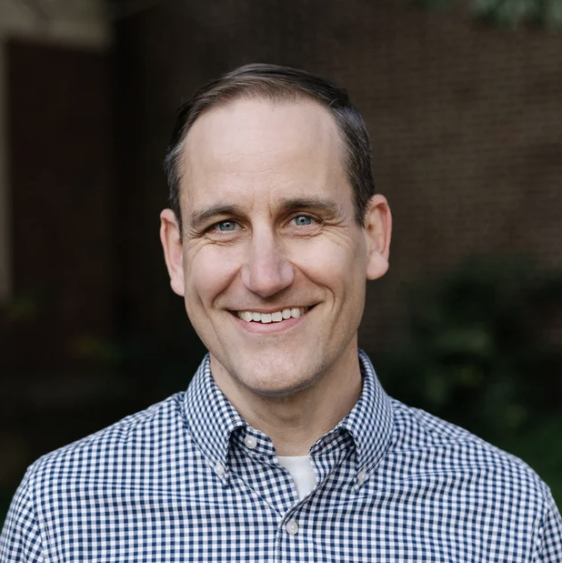
TE Erik Bonkovsky is the senior pastor at City Church of Richmond in Richmond, VA, a church he planted in 2008. A native New Englander, Erik studied at Princeton University (B.A. in History, 1998), Westminster Seminary (M.Div., 2001), and Covenant Seminary (D.Min., 2017). He lives in Richmond with his wife, Sarah, and their three children.